Author: Marc Lancaster
-
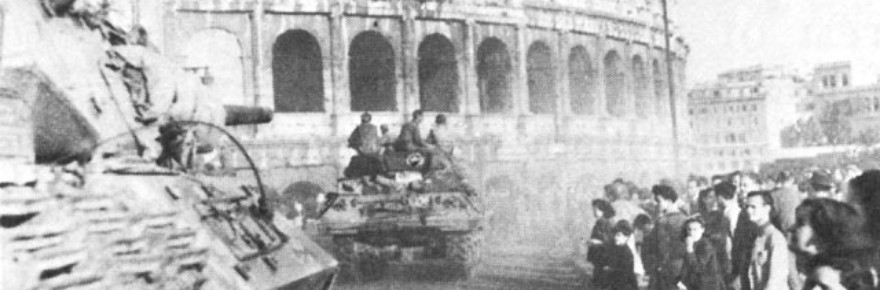
Missing D-Day: ‘Performers without an audience’
Around 3 a.m. on June 6, 1944, restless and unable to sleep, Lt. Vernon A. Walters turned on the radio in his room at the Excelsior Hotel in Rome. He heard German radio announce that the Allied invasion had begun, in Normandy, and pondered whether to tell his boss right away. Walters opted to sit…
-

D-Day: Joan Ellis and the AP’s accidental invasion report
The flash hit the Associated Press wire at 4:39 p.m. Eastern War Time on Saturday, June 3, 1944: FLASH LONDON EISENHOWER’S HEADQUARTERS ANNOUNCED ALLIED LANDINGS IN FRANCE U.S. broadcast news operations had been poised for just such an alert for weeks, and immediately sprang into action. Seconds after the flash hit the wire, CBS broke…
-
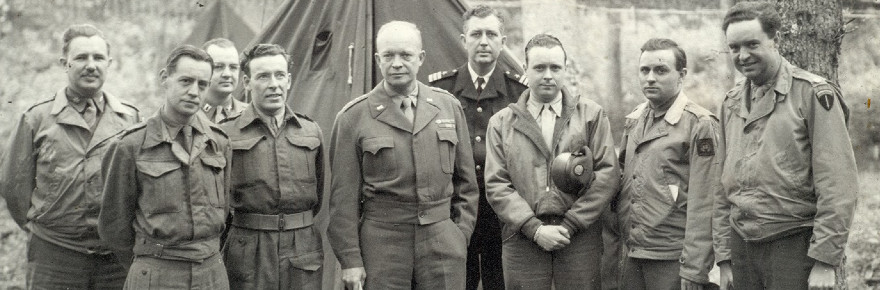
D-Day with Ike: Red Mueller at Eisenhower’s headquarters
Merrill “Red” Mueller of NBC spent nearly four months attached to Eisenhower’s HQ from D-Day on.
-

D-Day: Correspondents balance ambition, fear ahead of invasion
The classic bit that sums up the tension between the press and its handlers ahead of the Normandy Invasion first appeared in Leonard Lyons’ syndicated column on June 12, 1944: Shortly before the invasion began, Britain’s Ministry of Information was besieged by hundreds of newspapermen seeking credentials to cover the story. For a while the…
-

Attu: Japan’s last desperate charge
The American flag flew triumphant this Memorial day over the rocky ridges of Attu Island. That was the lead on the Associated Press story that ran in hundreds of newspapers Monday, May 31, 1943, in a report datelined the previous day out of Washington, D.C. It was based on War Department communiques, and the message…
-
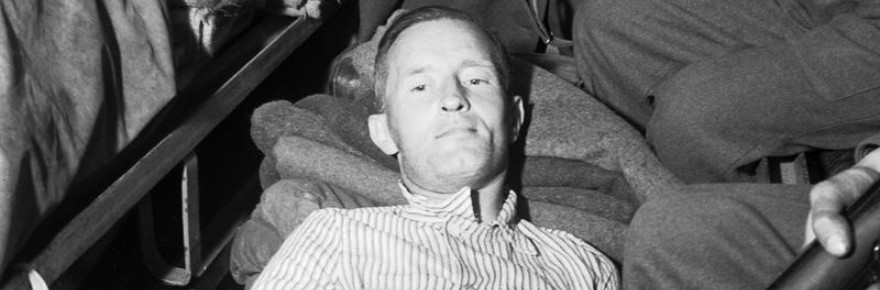
Lord Haw Haw captured by British forces
Late on the afternoon of May 28, 1945, two British officers gathering firewood north of Flensburg, Germany, near the Danish border, encountered a man in civilian clothes. He stopped to chat, first in German and then in French — his right hand in his pocket the entire time. He then said, in English: “I used…
-

Ernest Hemingway invades London ahead of D-Day
Gertrude Lawrence had been trying for some time to get back home after spending years in the United States. The actress finally secured a seat from New York to London on the Pan-Am Clipper in mid-May 1944 but worried to a fellow passenger right up until takeoff that she might get bumped from the flight.…
-

Ollie Stewart: The Afro-American’s man at the front
From the exploits of the Tuskegee Airmen to the liberation of Paris, Ollie Stewart spanned the Mediterranean and European theaters as a correspondent for Baltimore’s Afro-American newspaper.
-

The Dambusters raid: Guy Gibson and 617 Squadron
On May 16, 1943, the RAF launched one of its most ambitious operations of the war, bombing a pair of dams in Germany’s Ruhr region.
-
A very different Washington Post
Sometime after V-J Day, the War Department produced a list of correspondents who had received official acknowledgement for covering various theaters of the war. The list runs 13 typewritten pages and by my count includes the names of 837 reporters and photographers. Exactly one of them, Edward T. Folliard, worked for The Washington Post. It’s…
 World War II on Deadline