Category: Events
-

Operation Market Garden: Dropping in on Holland
In its earliest hours, Operation Market Garden seemed yet another Allied success. But correspondents on the ground soon realized little was going to plan, and their reports from the field reflected the increasingly dire situation — particularly near Arnhem.
-
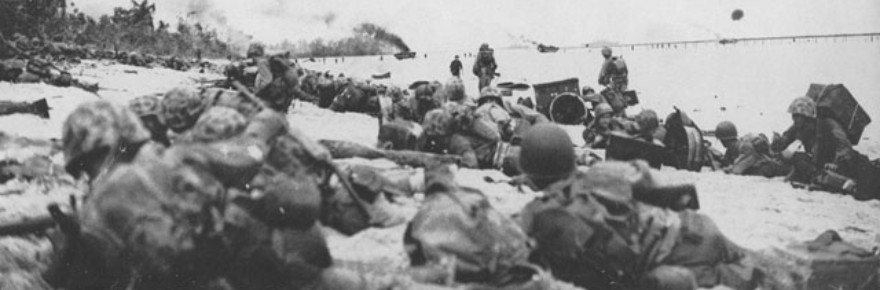
Peleliu: Hitting the beach with the Marines
Correspondents watching from offshore had an uneasy feeling as they eyed the small island of Peleliu, which seemed “too still” after a three-day bombardment. Those concerns proved valid when the 1st Marine Division went ashore to face a hellscape of dug-in Japanese defenders who would fight on for more than two months.
-

‘Today the guns are silent’: Japan surrenders
At 9:18 a.m. Tokyo time on Sunday, September 2, 1945, World War II came to an end. The war correspondents aboard the USS Missouri that day shared not only the details of the surrender ceremony but their reflections on what had brought the world to this long-awaited moment.
-

Clare Hollingworth and the scoop of a lifetime
Clare Hollingworth had been a Daily Telegraph correspondent for less than a week when she spotted a massive buildup of German tanks near the Polish border. Her report that an attack seemed imminent hit the front page three days before World War II began.
-

Paris liberated: De Gaulle under fire
Charles de Gaulle’s parade down the Champs-Élysées was to be the highlight of liberation celebrations on August 26, 1944, but gunfire from snipers along the route and even inside the Notre-Dame cathedral dampened the mood of the day.
-
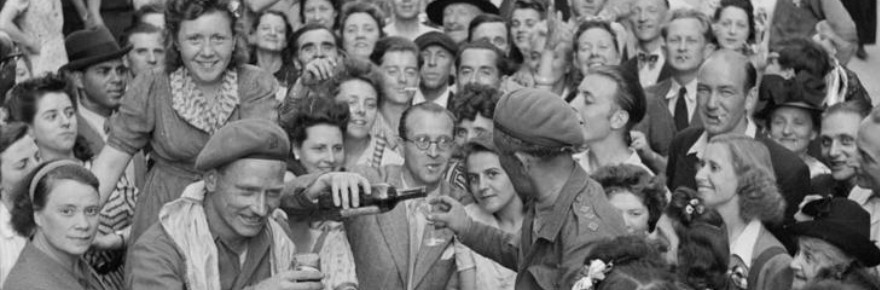
Liberation Day: When Paris went mad
The liberation of Paris was a day war correspondents in Europe had anticipated like no other, and the reality didn’t disappoint. The magnitude of August 25, 1944 was such that, in Ernie Pyle’s words, “A good many of us feel we have failed in properly presenting the loveliest, brightest story of our time.”
-

William L. Laurence witnesses the bombing of Nagasaki
New York Times science writer William L. Laurence joined the War Department as a “special consultant” to the Manhattan Project in the spring of 1945. That assignment put him in position to watch the bombing of Nagasaki firsthand from a B-29.
-
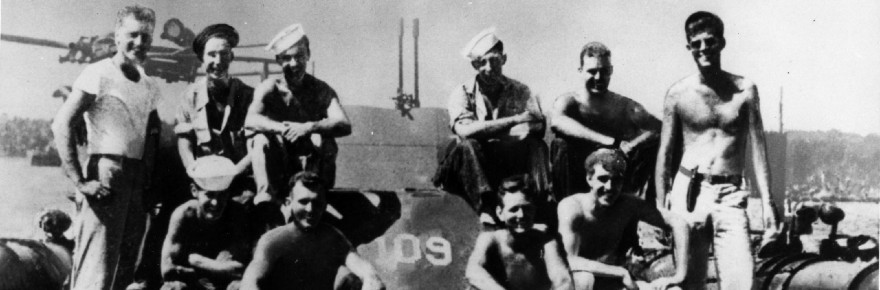
PT-109: John F. Kennedy fights to survive in the Solomons
John F. Kennedy’s heroic brush with death aboard the PT-109 in August 1943 put him in the spotlight, and he soon carved out a public persona of his own.
-

Sinking of the USS Indianapolis
By now most of us are familiar with the horrific details surrounding the sinking of the USS Indianapolis on July 30, 1945 — survivors adrift for days, fighting off sharks, delirious with thirst. Read about how the tragedy was reported at the time.
-

Killed by friendly fire: Lesley J. McNair and Bede Irvin
More than a hundred Americans were killed by bombs dropped by U.S. aircraft on July 25, 1944 — a key Army figure and beloved Associated Press photographer among them.
 World War II on Deadline